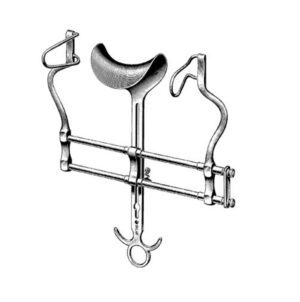
Balfour Rectractor
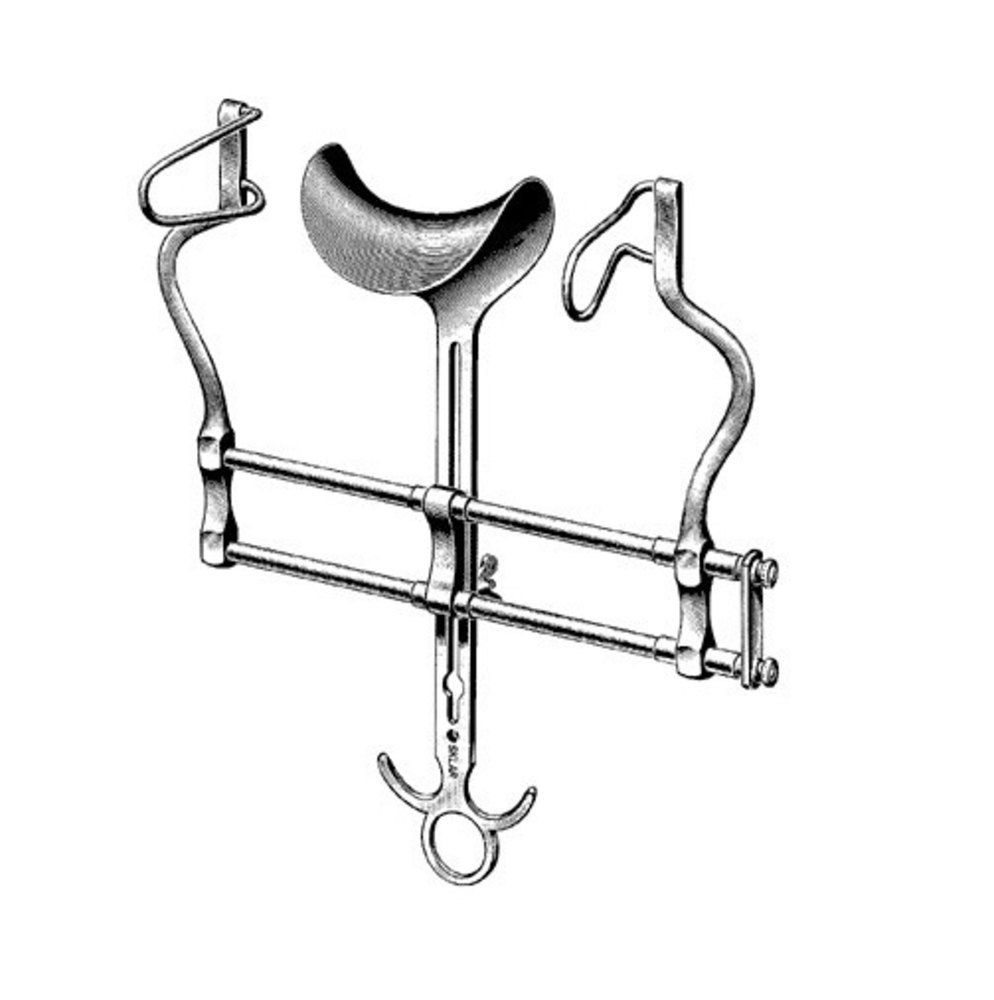
Description:- The Balfour Retractor is a self-retaining retractor designed to hold open abdominal walls during surgery. It provides excellent exposure of the surgical site, especially during laparotomy and other major abdominal procedures. It’s widely used in both human and veterinary surgery.
Description
Specifications
| Parameter | Typical Details |
| Material | Surgical-grade stainless steel (SS 304 or 316) |
| Length | 180 mm to 300+ mm (depending on model) |
| Blade Size | 30 mm to 75 mm (varies by type) |
| Blade Type | Solid, fenestrated, or adjustable |
| Side Blade Width | 25 mm to 50 mm |
| Opening Range | Up to 200 mm (adjustable) |
| Handle Mechanism | Ratcheting/self-retaining with screw lock |
| Sterilization | Fully autoclavable |
Types
- Standard Balfour Retractor: For adult human or large animal surgeries.
- Paediatric Balfour Retractor: Compact design for smaller incisions.
- Veterinary Balfour Retractor: Designed for dogs, cats, and other animals.
- With Centre Blade: Includes an optional third blade for deep cavity retraction.
- Adjustable Blade Variant: Allows blade movement or tilt for precise access.
Material
- Surgical-grade stainless steel: corrosion-resistant, durable, and fully autoclavable.
- Some models feature removable or interchangeable blades for flexibility.
- Optional silicone-coated blades for delicate tissue handling (special order).
Product Form
- Self-retaining retractor with two lateral arms and an optional center blade.
- Manual screw or ratchet adjustment system.
- Reusable; available sterile or for sterilization before use.
Human Medical Applications
- Used in general abdominal surgeries such as laparotomy, bowel resection, and C-section.
- Common in gynaecological, urological, and transplant procedures.
- Provides deep and stable exposure during exploratory surgeries.
Veterinary Applications
- Ideal for spaying and gastrointestinal surgeries in dogs and cats.
- Used in abdominal exploration for small and large animals.
- Helpful in orthopaedic and pelvic procedures in veterinary setups.
Advantages
- Self-retaining — frees the surgeon’s hands during operation.
- Provides wide and steady exposure of deep surgical areas.
- Adjustable blades allow versatility in multiple surgical types.
- Durable, corrosion-resistant, and fully autoclavable.
- Compatible with both human and veterinary use.
Disadvantages
- Bulky for narrow or small incisions.
- Incorrect placement can cause tissue pressure or trauma.
- Requires skilled handling and positioning.
- Heavier models can cause fatigue if not supported properly.
Precautions
- Ensure blades are locked firmly before starting the procedure.
- Avoid over-retraction to prevent muscle or tissue injury.
- Sterilize thoroughly before and after each use.
- Check screws, joints, and blades regularly for wear or damage.
- Use smooth-edged blades to avoid tissue tearing.
Sterilization Details
- Autoclave at 121°C for 15–30 minutes.
- Clean manually with enzymatic or neutral solutions post-surgery.
- Dry completely after sterilization to prevent corrosion.
- Lubricate moving joints occasionally with surgical-grade lubricant.
Handling & Maintenance
- Rinse immediately after surgery to prevent tissue residue buildup.
- Inspect for rust, loose screws, or damaged parts regularly.
- Store in padded trays or sterilized packs to protect blades.
- Replace worn or bent blades to maintain efficiency.
HS / HSN Code
| Code Type | Code Description |
| HS Code | 9018.90 – Surgical instruments including retractors |
| HSN Code (India) | 90189099 – Surgical retractors including Balfour type |
FAQs
Q1: What is a Balfour Retractor used for?
A: It’s used to hold open abdominal walls, providing access to deep surgical areas.
Q2: Is it self-retaining?
A: Yes, it locks in place and holds tissue apart without manual effort.
Q3: Can it be used in veterinary surgery?
A: Absolutely. It’s widely used in veterinary abdominal and orthopaedic procedures.
Q4: Is it autoclavable?
A: Yes, it’s made of surgical-grade stainless steel and fully sterilizable by autoclave.
Q5: What sizes are available?
A: Available in multiple lengths and interchangeable blade sizes for paediatric, adult, and veterinary use.